
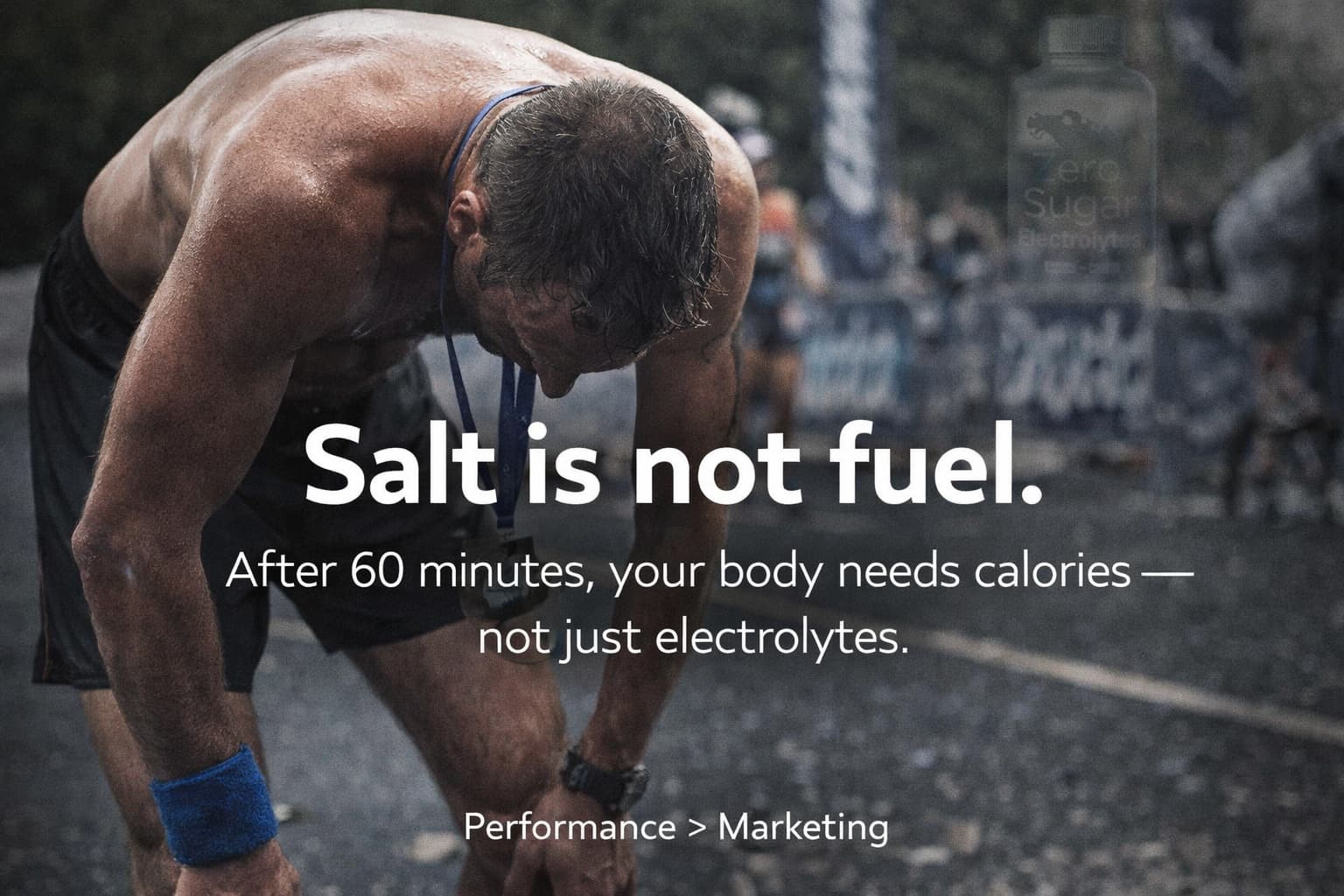
The Electrolyte Industry Has Lost the Plot
Written by Rishi Bhojnagarwala
Medically Reviewed by Dr. Hetal Pal, PhD in Nutrition Science
Scroll through any fitness feed today and you’ll see it:
“Zero sugar” electrolyte drinks.
Clean branding. Athlete endorsements. Big claims.
But here’s the uncomfortable truth:
👉 Most of these products are no longer designed for performance.
They’re designed for marketing.
What Electrolytes Were Actually Designed For
Electrolytes didn’t originate as a “wellness product.”
They came from sports science.
Their purpose was simple:
👉 Replace what’s lost in sweat
👉 Restore energy during prolonged activity
That second part is critical.
Because when you sweat, you don’t just lose sodium.
👉 You also burn through glycogen (stored carbohydrates).
Let’s Be Clear: Salt Is Not Fuel
Salt helps with:
Hydration balance
Nerve function
Muscle contraction
But it does not provide energy.
👉 Energy comes from calories.
👉 And calories come from carbohydrates.
This isn’t controversial.
It’s basic physiology.

The 45–60 Minute Threshold Most People Ignore
For shorter workouts (<45–60 minutes):
👉 Water is usually enough.
But once you cross that threshold:
Glycogen stores start depleting
Fatigue sets in
Performance drops
At this point, your body needs:
👉 Fast-release carbohydrates (glucose, dextrose)
Not just electrolytes.
What Happens When You Only Drink “Zero Sugar” Electrolytes
This is where the problem shows up.
Athletes today are:
Hydrated
Replenishing salt
But…
👉 Not fueling energy needs
Result:
Early fatigue
“Bonking” mid-run
Reduced endurance
The Psychology Behind “Zero Sugar”
So why did the industry move here?
Simple:
👉 Sugar became the villain.
“Zero sugar” sounds:
Clean
Healthy
Premium
But in endurance sports, this logic breaks down.
Your Muscles Run on Glucose
During prolonged exercise:
👉 Glucose is the primary fuel source.
And after ~60 minutes:
👉 External carbohydrate intake becomes necessary.
There is no workaround.
There is no hack.
The Cost of Following Marketing Over Physiology
We’re now seeing a generation of endurance athletes:
Drinking electrolyte water
Avoiding carbs
Wondering why performance is dropping
Because they’ve optimized for:
👉 Labels instead of function
What Effective Endurance Nutrition Actually Looks Like
For sessions >60 minutes:
You need a combination of:
1. Electrolytes
Sodium
Potassium
2. Carbohydrates
Glucose
Dextrose
Easily absorbable sugars
The Role of Awareness
Most people don’t track:
Carbohydrate intake during workouts
Total energy consumed
Real fueling patterns
👉 They only track “clean eating”
This is where tools like Caddy help:
Track actual intake (not just perception)
Balance protein, carbs, and energy
Support real-world performance
Why Data Matters
Understanding nutrition requires:
👉 Accurate food data
👉 Contextual serving sizes
👉 Real-world consumption patterns
Bon Happetee enables:
Accurate calorie tracking
Real Indian food logging
Better understanding of intake vs output
Final Thought
“Zero sugar” may sell better.
But performance isn’t built on labels.
👉 It’s built on physiology.
🚀 Key Takeaway
Salt hydrates.Carbs fuel.
You need both.