
Why Most Nutrition Tracking Apps Don’t Work in India
Written by Rishi Bhojnagarwala
Medically Reviewed by Dr. Hetal Pal, PhD in Nutrition Science
At first glance, most nutrition apps look the same.
They promise:
Calorie tracking
Macro breakdowns
Weight loss insights
But if you’ve tried using one in India, you’ve likely experienced this:
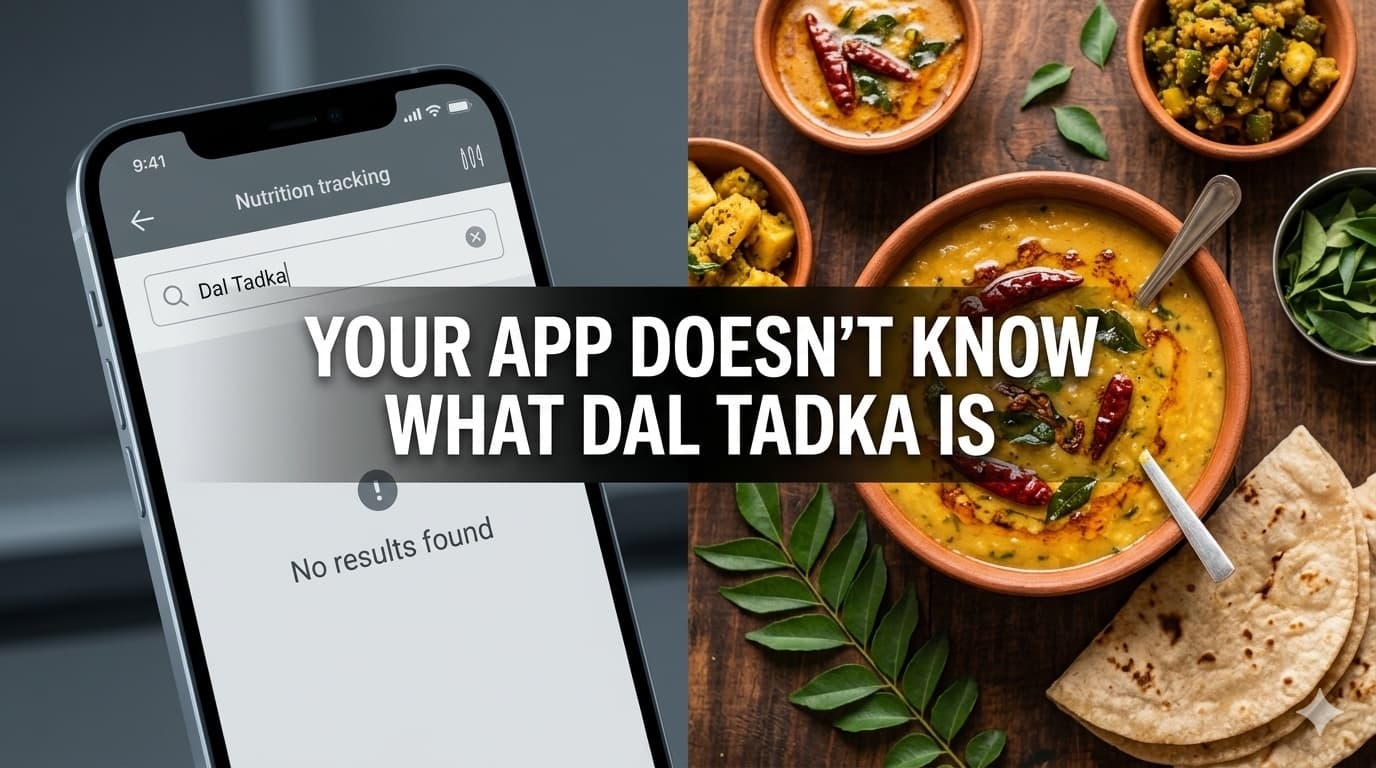
👉 The food isn’t in the database
👉 The numbers don’t feel accurate
👉 The experience feels disconnected from real life
And eventually… you stop using it.
This isn’t a motivation problem.
It’s a data problem.
The Hidden Truth: Nutrition Tracking is Only as Good as Its Data
A nutrition app is not just a product.
It’s a data system.
And the quality of that system determines:
Whether users trust it
Whether they stick with it
Whether it actually helps
👉 Bad data = broken experience

Why Global Nutrition Databases Break in India
Most global apps are built on:
Western food databases
Standardized meals
Simplified assumptions
But India is different.
Nutrition here is:
Diverse
Contextual
Highly variable
A “simple meal” in India can have:
Multiple dishes
Different cooking styles
Varying portion sizes
Regional variations
👉 You can’t “adapt” global data to India.
You have to build for India from the ground up.

What Real Nutrition Data Actually Needs
To work in India, a nutrition system must go deeper than just calories.
Here are the four pillars:
1️⃣ Coverage: Real Foods People Actually Eat
It’s not enough to have:
“Dal”
“Rice”
You need:
Dal tadka vs dal fry vs homemade dal
Regional variations
Branded and restaurant foods
👉 Without coverage, tracking breaks instantly.
2️⃣ Pairing: How Foods Are Actually Consumed
People don’t eat foods in isolation.
In India:
Dal + rice
Roti + sabzi
Idli + chutney + sambar
These combinations impact:
Total calories
Nutrient absorption
Meal behavior
👉 Ignoring pairing = incomplete tracking
3️⃣ Serving Methods: Home vs Restaurant Reality
The same dish can vary massively:
Homemade sabzi vs restaurant sabzi
Oil, ghee, butter differences
Cooking techniques
👉 Calories can differ by 2–3x for the same dish name
Without this layer:
👉 Data becomes misleading
4️⃣ Accuracy: Validated, Not Guessed
Many apps rely on:
Crowdsourced entries
Approximate values
Generic assumptions
But real accuracy needs:
Structured databases
Standardized measurements
Continuous validation
👉 Because once users lose trust, they stop tracking
The Caddy Approach: Built for India, Not Adapted
At Caddy, we approached this differently.
Instead of starting with an app…
We started with data.
Powered by Bon Happetee
Caddy is built on:
👉 Bon Happetee — 10+ years of Indian nutrition data
This includes:
Deep coverage of Indian foods
Real-world meal combinations
Context-aware nutrition mapping
Continuously refined datasets
Why This Matters for Users
When the data works:
Tracking feels effortless
Results feel believable
Users stay consistent
And consistency is what actually drives:
👉 Fat loss
👉 Better nutrition
👉 Long-term health
The Bigger Insight
Most people think:
👉 “I couldn’t stick to tracking”
But the reality often is:
👉 “The system didn’t work for me”
Final Thought
Nutrition tracking isn’t about willpower.
It’s about trust.
And trust comes from:
👉 Accurate
👉 Contextual
👉 Relevant data
💛 From Caddy
We’re building something simple:
👉 A nutrition system that actually understands India
Not just calories.
Not just macros.
But how people really eat.
🚀 Call to Action
If you’ve struggled with tracking before…
It might not have been you.
👉 Try tracking with a system built for India.
Try Caddy
Your simplest way to eat smarter with Indian food
Download