
Why Eating Healthy Isn't Enough to Lose Weight
Written by Rishi Bhojnagarwala
Nutrition Reviewed by Dr. Hetal Pal, PhD in Nutrition Science
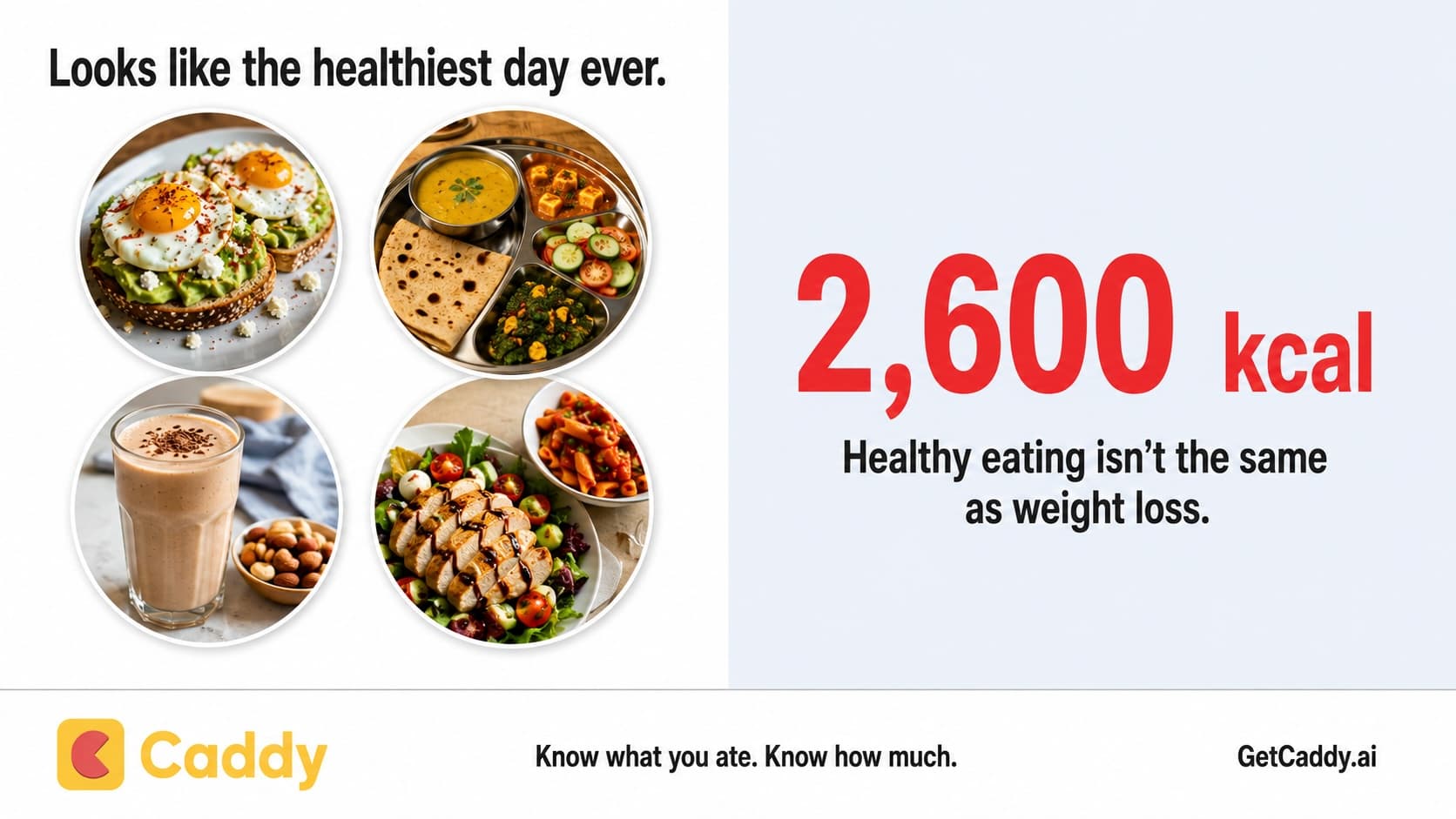
A 2,600-calorie day that looks like a dietitian's dream — and why it would stall weight loss for most people.
If you handed someone this meal plan and asked, "Is this healthy?" — almost everyone would say yes without hesitating.
Breakfast: Avocado toast with two fried eggs and feta cheese. Lunch: Dal, roti, paneer sabzi, green sabzi, kachumber salad. Snack: A protein shake with a handful of nuts. Dinner: Grilled chicken salad with dressing, and pasta in tomato sauce.
Protein, check. Fibre, check. Vegetables, check. Healthy fats, check. By every box nutritionists tell you to tick, this is a model day of eating. It's the kind of plate that gets screenshotted and captioned "eating clean."
And yet, for most people trying to lose weight, this exact day would stall their progress completely.
Here’s what Dr. CHAD LARSON, NMD, DC, CCN, CSCS has to say about this
"From a behavioral or clinical nutrition standpoint, why do people consistently underestimate the calorie impact of healthy fats like nuts, avocado, and ghee, compared to foods they've been taught to see as 'unhealthy'?"
Dr Larson: Health halo effect. If a food has a virtue label, once it's in the brain it's filed under permitted and the brain stops counting. The arithmetic is against small errors with fat at 9 calories per gram compared to protein or carbohydrate which is 4 calories per gram. 160 cal in a handful of almonds. The general rule is to pour closer to three handfuls. Nobody measures ghee, a tablespoon of ghee is 120. A half of avocado is about 160. All the above doesn't sound indulgent, and that's the issue.
"For patients on GLP-1 medications who assume appetite suppression alone will lead to weight loss, what's the most common mistake you see them make with food choice or portion size?"
Dr Larson: There is reduced volume of food for patients, no drop in food quality and protein levels go off a cliff. Appetite suppression reduces intake BEFORE it corrects composition. When the body loses 20 percent of its weight, 30 percent of which is from lean mass, the resting metabolic rate will be reduced. I consume 1.2-1.6 grams of protein per kilogram of body weight and hit the gym two or three times a week for resistance training.

A Day That Looks Like a Diet Influencer's Dream
Nothing here is processed. Nothing here is "junk." Every component — the eggs, the avocado, the dal, the paneer, the chicken, the nuts — shows up on every credible list of foods that support good health. There's no sugar bomb, no deep-fried snack, no soft drink hiding anywhere in this day.
Which is exactly why most people would assume this plan supports weight loss. It checks every visual and nutritional box we've been trained to look for. The problem is that "is this food healthy" and "will this day produce weight loss" are two completely different questions — and most diet advice only ever answers the first one.
What the Checklist Doesn't Tell You
Here's the part the checklist skips entirely: how much energy this day actually contains.

That single number changes everything about how this day should be evaluated. Food quality and energy quantity are separate axes entirely, and a day can score perfectly on one while completely failing the other.
2,600 Calories: Who Is That Actually For?
For a fairly active man, 2,600 kcal might land close to maintenance. For most women, smaller-framed men, and anyone with a less physically demanding day, it's more likely to support gradual weight gain than weight loss.
Weight loss generally requires a calorie deficit — eating less energy than your body uses. Most sustainable weight loss plans run a deficit of roughly 400–500 kcal a day, which for most adults brings the daily target down to somewhere around 1,500 kcal or less.
That's barely over half of what this "perfect" day adds up to.
This isn't a flaw in the meal plan's food choices. It's a gap in how we're taught to judge food — by what's on the plate, not by how much energy it carries.
Why Healthy Foods Are the Ones That Catch People Off Guard
Fat carries roughly twice the energy per gram that protein or carbohydrates do — approximately 9 calories per gram, compared to 4 calories per gram for protein or carbs. Foods built around healthy fats — avocado, nuts, cheese, olive oil dressings, oily fish — pack a lot of calories into a small, easy-to-eat portion.
Nobody finishes a packet of biscuits and assumes they've stayed within budget. But a generous serving of nuts, a few extra spoons of dressing, or "a little more" paneer in the sabzi rarely triggers the same alarm — even though the calorie impact can be just as significant, sometimes more.
This is the blind spot that "eat clean" advice almost never addresses. Healthy and low-calorie are not the same axis. You can do everything right by food-quality standards and still not see the scale move, simply because the quantities involved are higher than they look.
This Isn't a Call to Eat Less Healthy
To be clear — none of the foods in this meal plan are the problem. The Indian thali at lunch, with its dal, roti, paneer sabzi, green sabzi, and kachumber, is a genuinely well-balanced meal by any standard. Avocado, eggs, nuts, and grilled chicken all belong in a long-term diet.
The issue isn't what's being eaten. It's how much, stacked across four eating occasions in a single day, without anyone tracking the running total. This is also why blanket food rules — "avoid fats," "cut carbs," "go protein-only" — rarely solve the actual problem. The fix isn't removing food groups. It's visibility into portions and totals, so good food choices actually translate into the results people are working toward.
If You're on GLP-1, This Matters Even More
GLP-1 medications work by slowing gastric emptying and suppressing appetite — they quiet your hunger, but they don't teach you what or how much to eat. That's a meaningful problem when the appetite suppression makes people assume any food choice is "safe" simply because they're eating less often or in smaller sittings. A reduced appetite paired with calorie-dense "healthy" foods like nuts, cheese, and avocado can still add up to a day well above the deficit needed for the medication to deliver its full effect. The drug does the heavy lifting on hunger. The plan still has to come from somewhere else — see our breakdown of what a full GLP-1 nutrition plan should include, or get started with Caddy's GLP1 Buddy to build it directly into your tracking.
The Real Question Isn't "Is This Healthy" — It's "How Much"
Every meal in this plan would pass a nutritionist's checklist with flying colours. None of them would pass a calorie audit for someone targeting weight loss.
That's the core distinction worth sitting with: "healthy" tells you about food quality. "How much" tells you about energy balance. Weight loss depends almost entirely on the second question — and that's the one most diet advice skips.

How Caddy Fixes the Blind Spot
This is exactly the gap Caddy was built to close. Instead of asking you to memorise calorie counts, weigh every ingredient, or follow a rigid meal plan, Caddy works off a single, simple mechanic: take a picture of your plate, and get your daily Score out of 10.
Score 8 means you're in a calorie deficit — which, over time, means you're losing weight. No macros to track manually. No food groups to eliminate. No guilt attached to any specific dish, including the ones in this exact meal plan.
Built specifically around Indian meals — from thalis to street food to home-cooked sabzis — Caddy recognises portions the way Indians actually eat, not the way Western nutrition apps assume. At under ₹83/month, it's designed to sit quietly in the background of your day: take a picture, check your Score, adjust if needed, move on.
You don't need to eat less healthy to lose weight. You need to know how much of the healthy stuff you're actually eating — and that's the one number most "clean eating" plans never show you.
Know what you ate. Know how much.
Score 8. Lose weight. That's it.
Frequently Asked Questions
- Can you gain weight eating healthy food?
- Yes. Foods like avocado, nuts, paneer, and olive oil are calorie-dense by nature, and a fully "clean" day can easily total 2,500+ calories — more than most people need for weight loss. Food quality and calorie quantity are separate questions.
- How many calories should I eat per day to lose weight?
- Most weight loss plans use a deficit of 400–500 kcal below your daily needs, which typically lands between 1,400–1,700 calories for most Indian adults. The exact number depends on your height, weight, age, and activity level.
- Why am I not losing weight even though I eat clean?
- Your total calorie intake likely exceeds what your body burns, even with nutritious choices. Cooking fats, nuts, dairy, and dressings are the most common hidden sources — all healthy, all calorie-dense, and easy to underestimate.
- Do healthy fats cause weight gain?
- Not on their own — but they make overeating easy without noticing. Fat carries about 9 calories per gram, more than double protein or carbs, so small portions of nuts or ghee add up faster than people expect.
- What's the difference between eating healthy and eating for weight loss?
- Eating healthy means choosing nutrient-dense, minimally processed food. Eating for weight loss means maintaining a calorie deficit. You can do the first perfectly and still not achieve the second if your portions exceed your calorie target.
Get Caddy
Your simplest way to eat smarter with Indian food
Download