
Two Ways to Eat More Protein. Only One Protects Your Fiber.
Written by Rishi Bhojnagarwala
Nutrition Reviewed by Dr. Hetal Pal, PhD in Nutrition Science
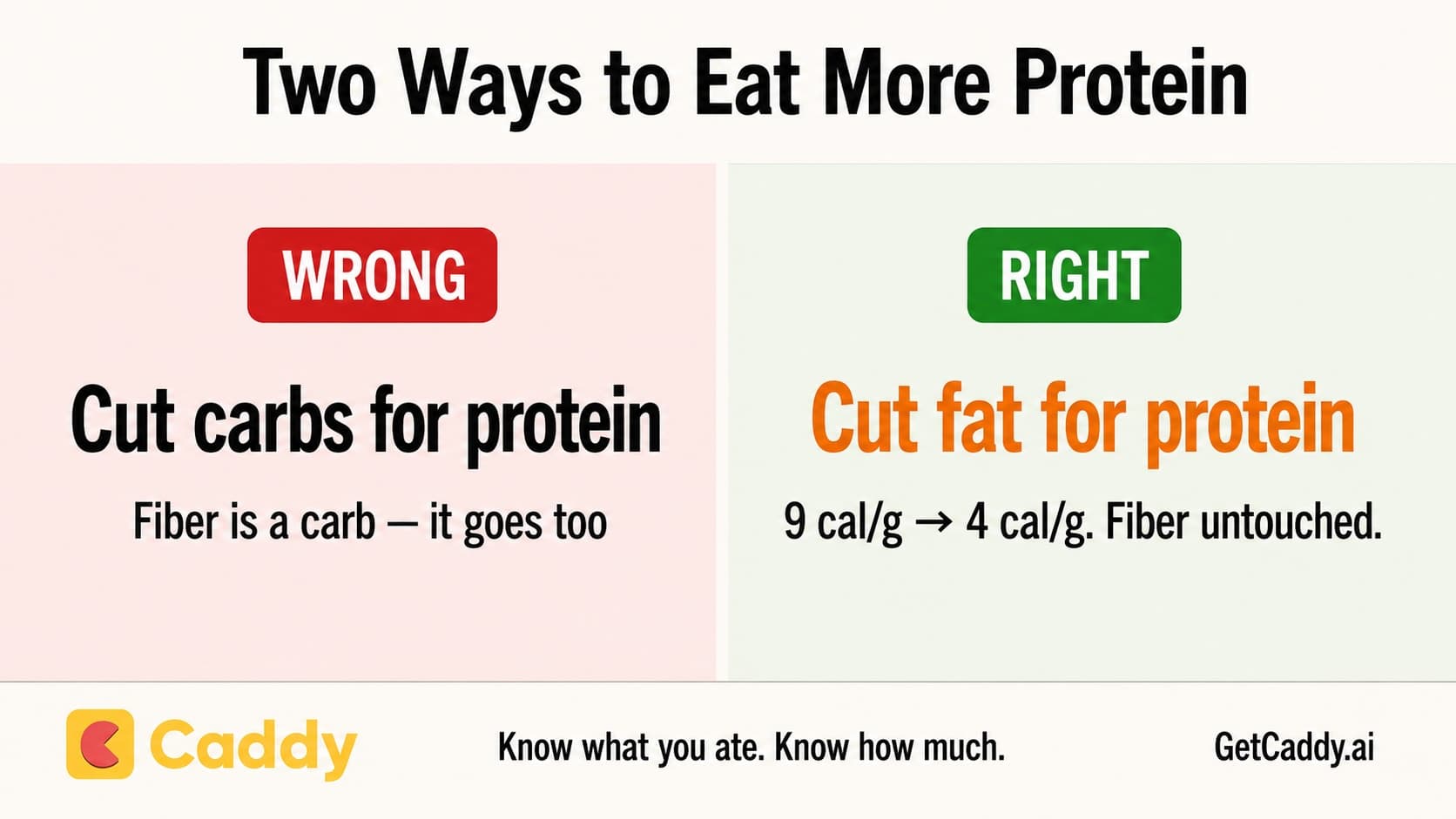
Cut carbs for protein, and fiber quietly disappears with it. Cut fat for protein instead, and you get the same protein gain, a real calorie advantage, and your fiber stays completely untouched.
Two Paths, Same Destination, Very Different Cost
Everyone agrees protein intake needs to go up. What almost nobody specifies is what you cut to make room for it — and that single choice determines whether you end up with a stronger diet or a quietly damaged one.
There are really only two levers available: cut carbs, or cut fat. One of these paths has already caused a documented nutritional crisis. The other one hasn't, and it's the one worth taking.
The Wrong Path: Cutting Carbs for Protein
This is what a decade of low-carb, high-protein wellness culture actually did, and the fallout is well documented. US recommended fiber intake sits at 22-38 grams a day, depending on age and sex. A 2017 analysis found roughly 95% of American adults and children fall short of the recommendation — a shortfall serious enough that the US Dietary Guidelines Advisory Committee officially classified low fiber intake as a "nutrient of public health concern."

Here's the mechanism behind that number. Dietary fiber is technically classified as a type of carbohydrate — the non-digestible portion of plant-based food. When people cut carbs broadly to make room for more protein, they rarely make a careful distinction between refined carbs (worth cutting) and fiber-rich carbs like whole grains, legumes, and vegetables (worth keeping). Both usually get reduced together. Protein intake improves. Fiber intake collapses along with the carbs it was embedded in.
Two registered dietitians confirmed this is exactly what they see in practice, independently of each other. We asked Rena Awada, Certified Nutrition Coach (PN1), founder of Healthy Fitness Meals:
I usually see people eliminate carbs first, as it's easier to spot carb sources in foods such as rice and roti. The issue with this is that when you cut back on carbs, you may be cutting back on some of your dietary fiber and making meals feel less full. A better way to start could be simply reducing how much extra fat (oil, ghee) is being cooked into food and adding a clear source of protein to each meal.
— Rena Awada, Certified Nutrition Coach (PN1)
Lavanya Kethamukkala, RDN, CLT, LDN, founder of Nourishing Expert with over 20 years of clinical experience, saw the same pattern:
I see carbohydrates being cut first, particularly rice and roti, as many people consider carbs "fattening." Don't cut fiber and nutrient-rich carbs just to make room for protein — follow portion control instead.
— Lavanya Kethamukkala, RDN, CLT, LDN
The Right Path: Cutting Fat for Protein
Here's the alternative, and it achieves the exact same protein goal without any of that cost.
Fat carries 9 calories per gram. Protein carries 4. Swap fat for protein, gram for gram, and two things happen simultaneously: your protein intake goes up, and you gain a genuine calorie advantage that supports weight loss — all without touching a single gram of carbohydrate.

Less ghee, less oil, less butter. More paneer, more dal, more eggs, more chicken. The protein increase is identical to the carb-cutting approach. The fiber cost is zero, because carbohydrates — and the fiber embedded in them — were never part of the swap.
In practice, this takes some coaching to get right. Rena's approach:
Reduce overall caloric intake by limiting added fats in cooking. For instance, measure your fat content (oil) when making the tadka, but keep all the other calorie-rich foods — dal, rotis, vegetables — as they are. Use that reduced total caloric intake and add high-protein foods like dal, yogurt, paneer, eggs, or tofu.
— Rena Awada, Certified Nutrition Coach (PN1)
Lavanya's is more substitution-based, and specific to how Indian dishes are actually built:
Reduce and restrict oil and ghee use rather than eliminating it completely. Increase the dal portion, add tofu to palak when making roti, add chickpeas or soybeans to pulao, or pair roti with extra vegetables and rajma, chana, or mixed lentils. Squeeze lemon or lime and garnish with cilantro for flavor instead of using ghee for garnish.
— Lavanya Kethamukkala, RDN, CLT, LDN
Why This Matters Specifically for India
India's dietary starting point looks nothing like the West's, and that context matters here.
The ICMR-INDIAB study — a nationally representative survey of 121,077 adults across 36 states and union territories, published in Nature Medicine — found Indians derive roughly 62% of daily calories from carbohydrates, among the highest rates in the world. Protein sits at just 12% of daily energy, below the national guideline of 15%.
In other words, India never had a carbohydrate excess problem in the way the West's low-carb movement assumed it did. The actual gap was protein. Which means the fix was never "cut carbs, add protein" — a strategy imported from a very different starting point. The fix that actually matches India's dietary profile is "cut fat, add protein," leaving the carbohydrate base — and the fiber inside it — exactly where it was.
The Warning Sign Already Showing Up
India's fiber numbers offer a hint about which path is actually being taken at scale. ICMR-NIN recommends roughly 30 grams of fiber per 2,000 kcal, broadly in the 25-30 gram range for most adults. Actual average intake is estimated at somewhere between 8 and 16 grams, depending on the study — a gap comparable to, or larger than, the one documented in the US.
That gap shouldn't exist if the fat-for-protein swap were the dominant strategy, since that swap leaves carbs and fiber untouched. Its presence suggests a meaningful number of people are already taking the carb-cutting path — the one that quietly recreates America's fiber crisis, just applied to a population that never had America's carb-excess problem to begin with.
Right-Size the Fat, Don't Eliminate It
One caution is worth adding here, and it came directly from both experts: "cut fat" shouldn't mean "remove fat." Rena flagged this specifically:
If "cut fat" means remove fat, this method wouldn't work well in many Indian dishes, where oils or ghee help transport flavor and contribute to texture and satiation. I prefer "right-size the fat first, then add your protein." Measuring your cooking fats lets you maintain the character of the dish while creating space for additional protein.
— Rena Awada, Certified Nutrition Coach (PN1)
Lavanya added a health angle for why moderation, not elimination, is the right target:
With heart disease risk rising rapidly in India, I'd keep a close watch on fat consumption and swap traditional deep-frying for methods like sautéing, roasting, air frying, and steaming. A healthier Indian plate should still taste Indian. It's about better proportions, not removing tradition.
— Lavanya Kethamukkala, RDN, CLT, LDN
That's a genuinely useful refinement to the "cut fat" framing above: measure and reduce the added fat, don't strip it out entirely, and let cooking method do some of the work modern nutrition science recommends anyway.

The Simple Version
Keep your carbs. Dal, roti, sabzi, whole grains, legumes, vegetables — these stay on the plate exactly as they are, because they're your fiber source, and fiber was never the problem to begin with.
Right-size your fat. Less ghee poured on top, less oil in the cooking — measured and reduced, not eliminated. This is where most of the calorie room actually needs to come from.
Add the protein. Paneer, dal, eggs, chicken, fish — filling the calorie space that fat used to occupy, gram for gram, at less than half the caloric cost.
Same protein gain either way. Only one path protects your fiber.
How Caddy Fits Into This
This is exactly why Caddy tracks protein, fat, and fiber together — not protein in isolation. A protein number climbing while your fiber number quietly falls is invisible if you're only watching one metric. Caddy shows you both, so you can tell whether you're making the right swap or the wrong one, meal by meal.
Built specifically around Indian food, at under ₹83/month, Caddy helps you raise protein the way that actually fits India's dietary starting point — without recreating a fiber crisis nobody meant to cause.
Know what you ate. Know how much.
Score 8. Lose weight. That's it.
Sources
Frequently Asked Questions
- Should I cut carbs or fat to increase my protein intake?
- Cut fat, not carbs. Fat carries 9 calories per gram versus protein's 4, so swapping fat for protein gram-for-gram gives you more protein and a genuine calorie advantage — without touching your carbohydrate intake, which is where most of your fiber comes from.
- Why does cutting carbs for protein lower fiber intake?
- Dietary fiber is technically classified as a type of carbohydrate. When people reduce carbs broadly to make room for protein, they usually cut both refined carbs and fiber-rich carbs — like whole grains, legumes, and vegetables — together, since most diets don't distinguish between the two. This is a major reason roughly 95% of American adults now fall short of recommended fiber intake.
- Do Indians need to cut carbs to eat more protein?
- No. ICMR-INDIAB data from a study of over 121,000 adults shows Indians already derive about 62% of calories from carbohydrates — among the highest rates globally — while protein sits at just 12%, below the 15% guideline. The actual gap has always been protein, not excess carbs, so cutting carbs isn't the right lever for most Indians.
- How much fiber do Indians typically get compared to the recommendation?
- ICMR-NIN recommends roughly 25-30 grams of fiber daily. Average actual intake is estimated at 8-16 grams, depending on the study — a significant shortfall that may reflect people cutting carbs (and the fiber within them) while trying to raise protein intake.
- What foods should I cut to make room for more protein without losing fiber?
- Reduce visible fats — ghee, cooking oil, butter — rather than carbohydrate-rich foods. Replace that calorie space with protein sources like paneer, dal, eggs, chicken, or fish. Keep whole grains, legumes, and vegetables on your plate, since these are your primary fiber sources.
- Does "cut fat for protein" mean removing fat from Indian cooking entirely?
- No — both dietitians consulted for this piece flagged that as a mistake. Fat plays a real role in flavor, texture, and satiety in Indian cooking. The goal is measuring and reducing added fat, not eliminating it, and shifting some cooking toward methods like sautéing, roasting, or air frying rather than deep frying.
Get Caddy
Your simplest way to eat smarter with Indian food
Download